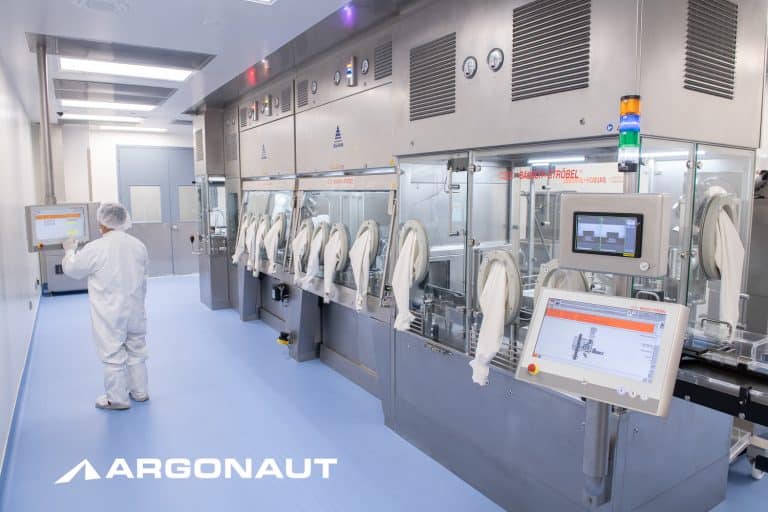
Since the 1970’s, aseptic fill-finish has undergone multiple shifts from manual, sponsor-led operations in laminar airflow cleanrooms to highly specialized, isolator-based manufacturing.
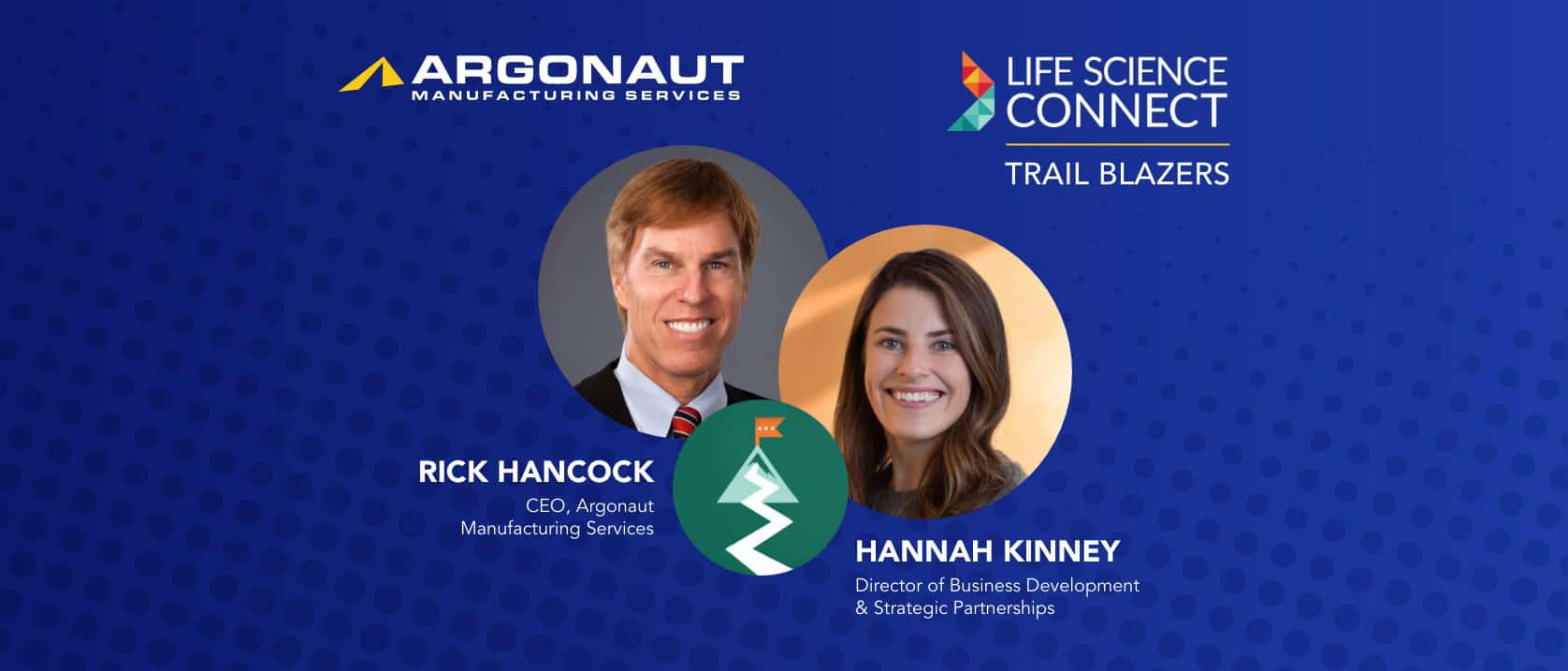
In the Trailblazers interview series, Perry Renick spoke with Argonaut Manufacturing Services leaders Rick Hancock and Hannah Kinney about how Argonaut designed a future-proof aseptic filling line to improve sterility and quality in the pharmaceuticals they manufacture. They discuss why investing ahead of the regulatory curve, embracing isolator technologies, and simplifying supply chains are critical to delivering high-quality, end-to-end aseptic fill-finish services, especially under the revised EU GMP Annex 1.
“You have to plan way in advance. It takes at least three years from planning stages to get an isolator-based fill-finish line completed.”
Rick Hancock is the CEO of Argonaut, with over 34 years of life sciences experience and prior served as the CEO of Althea technologies. His track record covers cGMP manufacturing, regulatory readiness, and scale-up, grounded in disciplined execution batch after batch.
Hannah Kinney is the Director of Business Development for Argonaut and has spent years in fill-finish CDMOs. Hannah’s expertise is in translating fill-finish needs into effective manufacturing solutions.
Fill-finish has become complex
As Rick describes, “40 years ago, for early stage [manufacturing], we did hand-filling.” As technology advanced, regulations followed a few steps behind until August 2022 when the EU made a significant update to their GMP guidelines for sterile medicinal products (Annex 1). “Regulations continued to increase in the U.S, but now Europe tends to be the one driving the standards. Most [sponsors] want the options to [perform] clinical trials or commercial [operations] in the U.S., in Europe, [or other territories]… and so then, they’re forced to comply with the European requirements, which are extremely stringent.”
The barrier to entry in fill-finish has gone up correspondingly, requiring more complex and expensive equipment. “The industry is really leaning more into isolator-based filling, especially with the new Annex 1 compliance and guidelines that are out there. They basically say you need to be filling inside isolators,” adds Hannah.
Additionally, the requirements for the components going into the operation have also significantly increased.
Building an advanced isolator-based fill-finish operation is a large investment
By today’s standards, fill-finish operations require isolator technology, validated processes, robust environmental monitoring, trained operators, and the quality infrastructure to prove—on paper and in practice—that you can run clean, repeatable, inspection-ready batches.
“If we’re going to do it, we’re really going to do it right… When we have our customers or regulatory people come through that new facility, they’re just very excited with what they’re seeing because it’s not only state-of-the-art but it’s forward looking to where the regulations are going.”
In the interview, Rick and Hannah both come back to the same point: this capability takes serious planning and investment. As Rick explains, “You have to plan way in advance. It takes at least three years from planning stages to get an isolator-based fill-finish line completed.” And the investment doesn’t stop at installation. Argonaut is already planning future expansions, including adding lyophilization to support evolving product and stability needs.
As Rick summarizes: “If we’re going to do it, we’re really going to do it right… When we have our customers or regulatory people come through that new facility, they’re just very excited with what they’re seeing because it’s not only state-of-the-art but it’s forward looking to where the regulations are going.”
Choosing a CDMO
Hannah is clear on what matters: sponsors should partner only with CDMOs that have a robust inspection history. If Annex 1 compliance matters to your program, start that conversation early.
“A lot of our partners are good at the drug substance and API side. We are great at fill-finish.”
Hannah also points out that responsiveness and flexibility are essential, especially for clinical projects. “For the client the product is their baby, and they need responsiveness.” The ideal CDMO is one that can “support a client from clinical all the way up to commercial, but also remain operationally flexible.”
Rick added that building trust is essential for a successful partnership “Sometimes these API’s cost, five, six, or seven million dollars, and they have to trust us that we’re going to do the best job humanly possible.”
Right-sized capacity for high-value, high-attention programs
Hannah describes Argonaut’s approach as “white glove,” but it’s not a marketing flourish. Argonaut isn’t built to fill “millions and millions” of units. That matters because many early clinical and rare disease programs don’t need enormous volume. What they need is a partner who will treat a small run with the same discipline and urgency as a large one. The risk profile doesn’t scale down just because the batch is smaller.
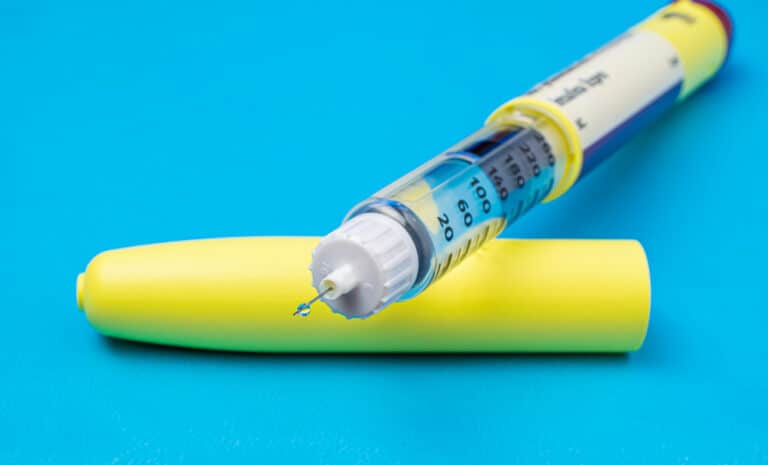
In the interview, Rick and Hannah discuss the range of batch sizes, from very small fills to runs on the order of 100,000 units, and about supporting common primary containers like vials, syringes, and cartridges. But the point isn’t the number. The point is flexibility and a facility set up to do the work cleanly across that range.
Partnerships that emphasize expertise
ponsors want experts across the lifecycle of their drug product without managing a whole lot of people in their supply chain, and a one-size-fits-all CDMO isn’t the answer. Rick describes it this way: “A lot of our partners are good at the drug substance and API side. We are exceptional at fill-finish. We have a partner on the packaging side who is excellent in the packaging and labeling. We have linked these all together to provide the best possible solution for the client.”
Partnerships provide the deep-level expertise sponsors need but Argonaut has figured out how to reduce friction. They cut down on duplicated onboarding, mismatched expectations, and the slow bleed of time that happens when accountability gets fragmented. The protection is simple: fewer seams in the supply chain, fewer places for something to slip, and clearer ownership when decisions need to be made.
Don’t forget the “customer’s customer”
In this work, there’s always a patient on the other end of the process. When the fill-finish team on the floor knows the impact to that patient behind a run, it changes how the day feels. The work involved in maintaining a high-quality system is no longer abstract. Hannah sums up what many on the Argonaut team feel: “It gives you more purpose in your work and in what you do, so that’s what I really love about it.”
Somethings don’t change, even in the age of AI
Rick closed by connecting the future to the past. “We’re looking at all kinds of cutting- edge tools to help our BD team (such as AI). But as it was in the past, and I think, as it’ll probably be in the future, in this space it is all about the human interaction. It always comes back to trust.”
Watch the whole interview here.
Learn more about isolator-based fill-finish from Argonaut; Contact Us today.
What quality-first aseptic fill-finish looks like
- Sterility assurance by design, through intentional facility and equipment investments
- A quality system that leads, not reacts
- Isolator-based controls that reduce human-driven variability
- Investment ahead of the curve, so programs don’t get disrupted by shifting expectations
- Right-sized attention, especially when volumes are small but stakes are high
- A simpler supply chain, with clear, sustained accountability